
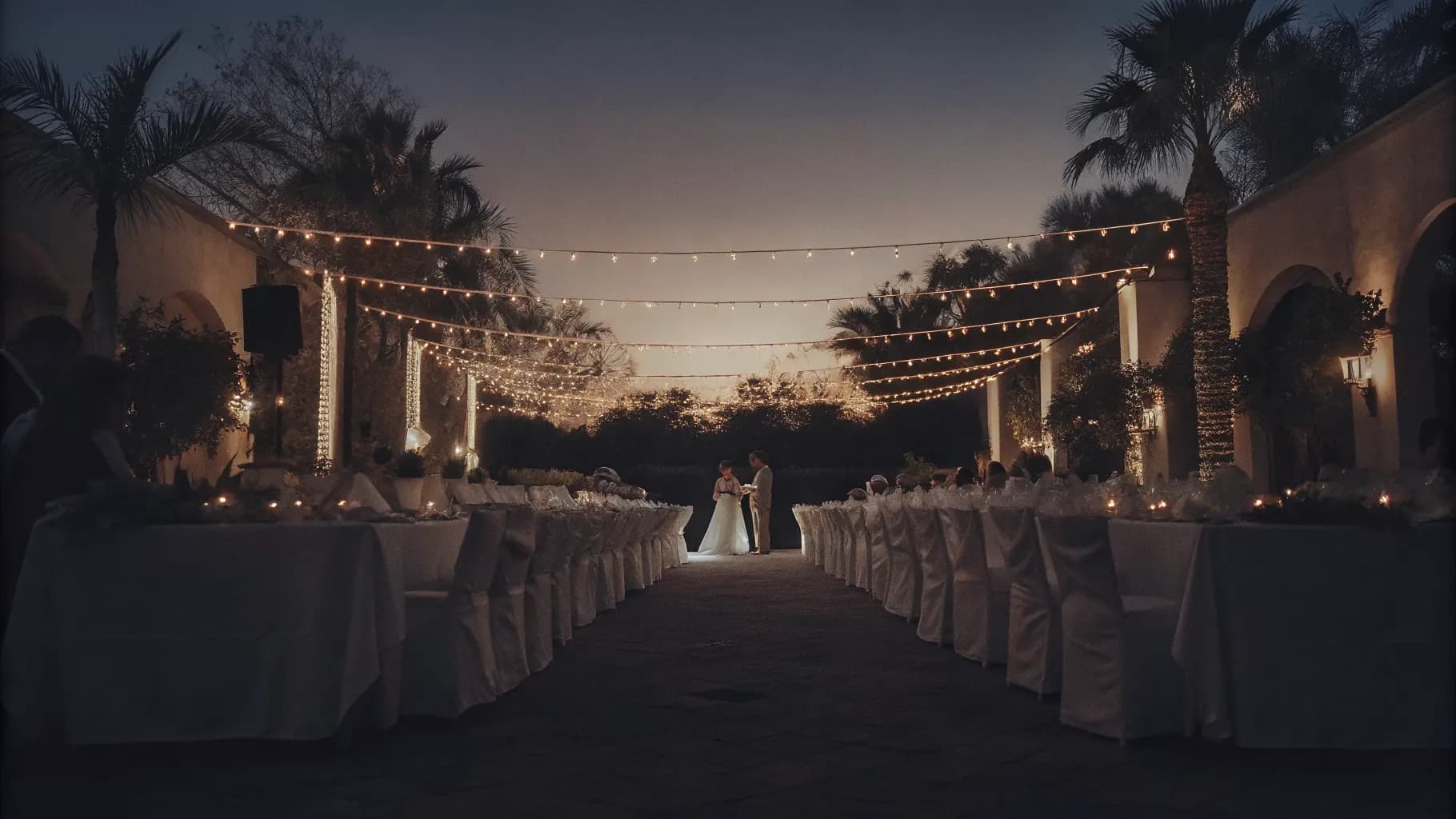
You can spend months on flowers, food, and a perfect gown, and still have guests remember a reception for the wrong reason: they could not hear the vows, the speeches squealed with feedback, or the room sat flat and dim. Lights and sound are the invisible backbone of a reception. Done well, no one notices them — the evening simply flows. Done badly, they undermine everything else. Here is how to plan AV so the night is heard and seen exactly as you imagined.
What lights and sounds actually covers
In the Philippines, "lights and sounds" is usually one combined supplier handling both the audio and the lighting design — and often the technician who runs it live throughout the reception. Understanding the pieces helps you ask the right questions, and tells you quickly whether a quote is complete or quietly missing something you will need on the night.
- Sound: speakers sized to your room and crowd, microphones for the officiant, host, and speeches, and a mixing board with a live operator.
- Lighting: ambient and mood lighting, uplights to wash the walls in your palette, spotlights for the entrance and first dance, and sometimes a monogram or gobo projection.
- AV and screens: an LED wall or projector for your photo or video montage, a slideshow, or a live feed of the program.
- The operator: a technician on site for the whole event, not just a drop-off of equipment.
Match the setup to your venue and program
There is no universal package, because every room is different. A garden or open-air venue needs more power, weather contingencies, and speakers that carry without echoing into the night. A ballroom needs sound tuned so it fills the space without booming. The single most important step is a venue ocular — the supplier visiting your actual location to plan placement, power, and coverage. Booking lights and sound without one is how couples end up with thin audio in half the room.
Worth keeping
Guests forgive a simple room. They do not forgive not being able to hear the vows. Sound is the one corner of the budget you should never cut to the bone.
The questions that prevent disasters
Most AV problems on the day are not bad luck — they are unasked questions. Settle these in writing before you sign.
- Will a technician operate the system live for the entire event, and is overtime included if the program runs long?
- Is there backup gear — a spare microphone, a redundant mixer — in case something fails mid-program?
- Have they done an ocular of our venue, and does the package match its size and power supply?
- How do they coordinate with our host, band or DJ, and the photo-and-video team for cues and timing?
- Is a montage screen or LED wall included, and do they need our files in a specific format ahead of time?
Coordinate the lights and sounds team with your host and music early, ideally at the same planning meeting, so the entrance music, the dimming for the first dance, and the spotlight cues all land together rather than fighting each other on the night. As a rough 2026 market guide, lights-and-sounds packages in the Philippines range widely with room size, gear quality, the length of the event, and whether LED screens are included. The order of spending matters more than the total: put your money first into clear, reliable sound and a live operator who stays for the whole program. The lighting flourishes — the uplights, the monogram, the warm wash on the walls — are genuinely worth it, but only once the room can hear you say "I do."
Find lights-and-sounds and AV suppliers who know your venue, and compare them commission-free.
Browse the supplier marketplaceKeep reading
More from the edit


Ready to start your own plan?
Guest list, budget, schedule, seat plan, and mood board — free with every Setnayan account.
Start planning · free