
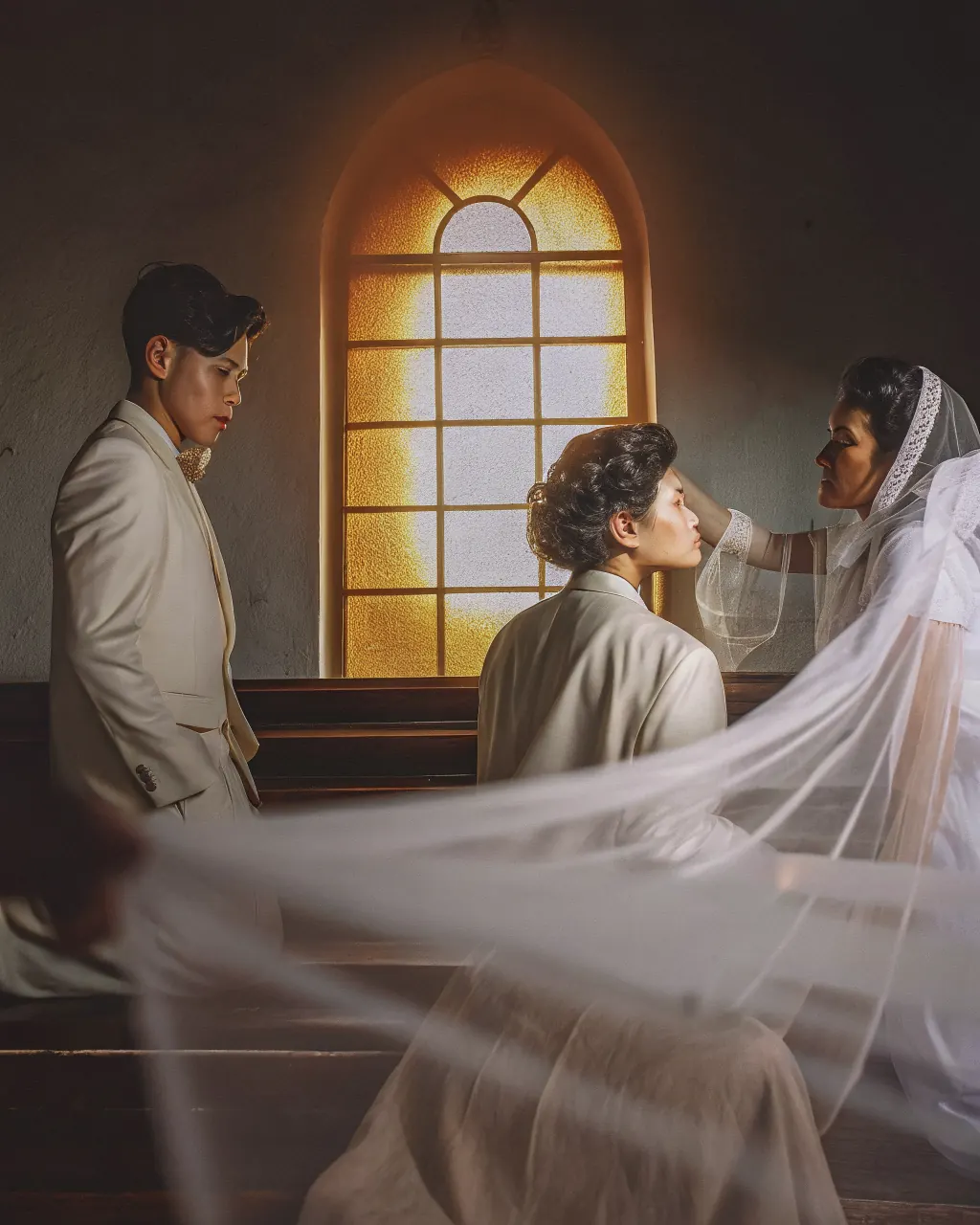
There is a hush that falls over a Filipino church wedding when the veil and cord come out. The vows are spoken aloud, but these three rites — the veil, the cord, and the coins — say their part in silence, with cloth and metal and the careful hands of people the couple love. They are the oldest layer of the ceremony, carried here through generations of Spanish-Catholic and Filipino practice, and to most guests they are simply beautiful. Knowing what they mean turns a lovely moment into an unforgettable one — for the couple kneeling at the altar and for everyone watching from the pews.
The veil: clothed as one
The veil is a single length of cloth, usually white or ivory, draped to cover the bride's head and the groom's shoulders at the same time. Two veil sponsors step forward to pin it in place while the couple kneels, and for a few seconds the two of them are joined under one piece of fabric. The image is plain and powerful: two separate people, now clothed as one. Many families read it as health, protection, and the sheltering of the home they are about to build — a covering that says the couple will face whatever comes together, under the same roof, sharing the same shelter.
The cord: a union without end
After the veil, the cord sponsors loop a single cord over the couple's shoulders in a figure eight — the yugal. Often it is a decorative rope, sometimes a string of sampaguita or other flowers, sometimes beads, occasionally a rosary chosen for its meaning. Whatever the material, the shape is the message. A figure eight has no beginning and no end; it is the line of infinity, laid gently across two pairs of shoulders. And notice that it binds loosely, never tightly — a union freely entered, held by choice rather than by force. The couple can lean toward each other within it, which is rather the point.
Worth keeping
A figure-eight cord has no beginning and no end — which is the whole point. It is everlasting union, drawn in a single line.
The arrhae: thirteen coins, one promise
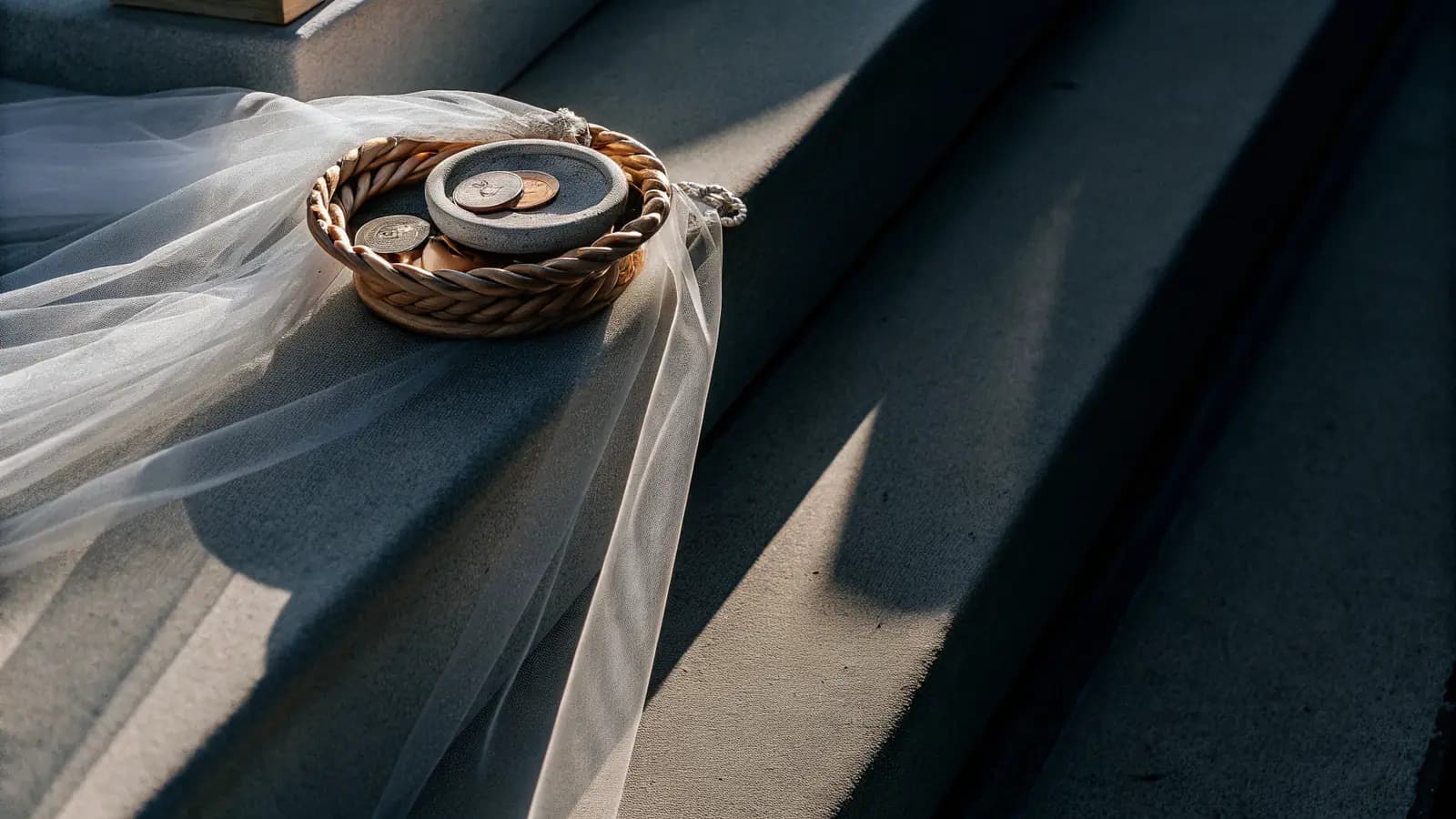
Then come the coins. The groom takes the arrhae — 13 coins, blessed by the officiant — and pours them into the bride's open, cupped hands, sometimes passing them back and forth between the two of them first. It is a pledge of provision: a promise that what he has, he places in her care and in the care of the household they are starting. The number 13 carries its own quiet weight, often linked to the months of the year or to abundance. Many couples now treat the rite as a shared vow rather than a one-way gift, both partners committing aloud, with their hands, to provide for and trust each other.
- The veil sponsors and cord sponsors are part of your secondary sponsors — usually younger married couples or close friends, and it is a real honour to be asked.
- The arrhae are often kept afterward as a keepsake, displayed at home or passed down to the next couple in the family.
- Customs vary by family and region; some skip a rite, reorder them, light the candle first, or add a personal blessing of their own.
- The candle, veil, and cord usually move in sequence during the ceremony, each with its own pair of sponsors stepping forward.
How to make them yours
If you are planning a ceremony with these rites, decide early who will perform each one — the veil, cord, and coin sponsors belong to your entourage and deserve to be asked in person, not by group chat. Coordinate the order with your officiant, since parishes differ, and walk through it once at the rehearsal so no one is unsure where to stand. Brief your photo-and-video team specifically so they catch the moment the cord settles and the coins fall; these are the frames couples treasure most, and they happen only once. And if a rite does not fit your faith or your story, leave it out with a clear conscience. Not every couple does every one, and a wedding is no less married, and no less meaningful, for it.
Want the full cast — sponsors, bearers, ninong, and ninang — and what each one does? Read the entourage guide.
Start planning freeKeep reading
More from the edit
Ready to start your own plan?
Guest list, budget, schedule, seat plan, and mood board — free with every Setnayan account.
Start planning · free