
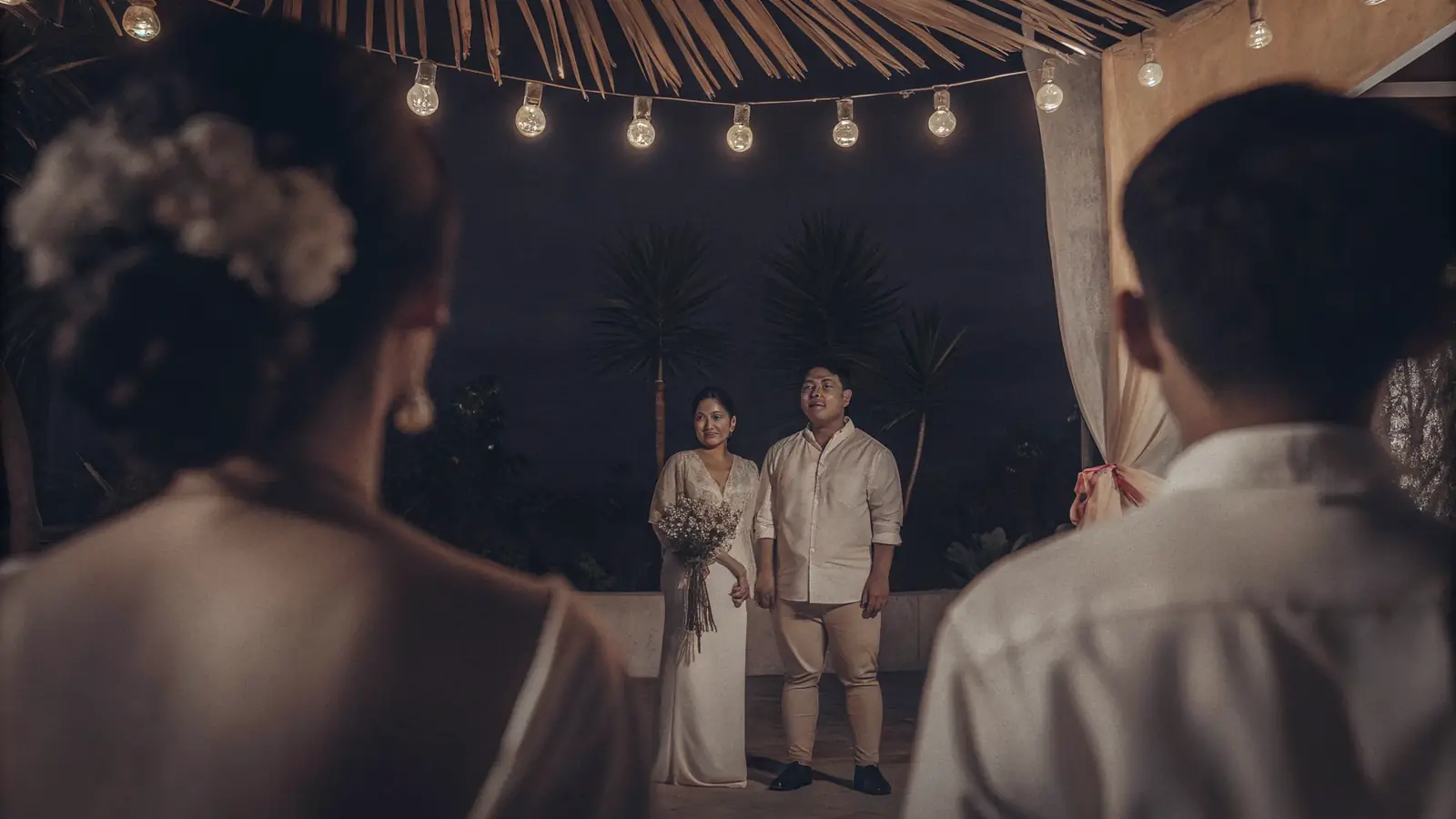
Love rarely checks which church, mosque or province you come from. Across the Philippines, couples marry across faiths and traditions all the time — Catholic and born-again, Christian and Muslim, Chinese heritage and Filipino custom, North and South. A mixed-faith wedding is not a problem to solve so much as two beautiful inheritances to honour at once. With early conversations and a little planning, both families can feel fully seen on the day. Here is how thoughtful couples approach it, in general terms — the specifics always belong to your families and your officiants.
Start with the conversations, not the venue
The most important planning for a mixed-faith wedding happens in living rooms, not supplier showrooms. Talk early — with each other first, then with both sets of parents, then with the officiants of each faith. Understand what each tradition asks, what is non-negotiable for each family, and where there is room to blend. Many tensions dissolve simply because the conversation happened months ahead instead of the week before, when emotions and deadlines are both running high.
- Ask each officiant what their faith requires — and whether they will co-officiate or hold separate rites.
- Identify the one or two elements each family considers essential, and protect those.
- Decide the order of the day so neither tradition feels like an afterthought.
- Agree on language, music and attire that let everyone feel at home.
Common ways couples blend two traditions
There is no single right format. Some couples hold one religious ceremony and weave symbols of the other tradition into the reception. Some hold two ceremonies — for instance, a religious rite and a separate cultural one such as a tea ceremony. Some marry civilly to satisfy the law, then celebrate each faith in its own moment, on its own day. Each faith sets its own rules about interfaith marriage, so confirm what is possible with your officiants rather than assuming; what one tradition permits, another may approach differently.
Small gestures of inclusion go a long way. Printing the order of service so guests can follow an unfamiliar rite, choosing readings or songs that speak to both sides, seating the two families thoughtfully, and briefing your entourage on what to expect — these quiet courtesies are what make every guest feel like a participant rather than a spectator. The goal is not to merge two faiths into one, but to let each be honoured fully and graciously.
Worth keeping
A mixed-faith wedding done well leaves no one feeling like a guest at someone else’s ceremony — both families recognise their own love in it.
Keep the legal layer simple
Whatever the religious arrangement, every marriage in the Philippines needs to meet the civil requirements — the marriage licence above all. Sorting this early removes one variable from an already layered plan. Note too that Muslim marriages are governed by their own code; if one partner is Muslim, confirm the legal path with the appropriate authorities and your imam, rather than assuming the standard civil route applies in the same way.
When two traditions share a day, sequencing and communication are everything — and that is exactly where a calm plan helps. A free planning workspace lets you lay out both ceremonies, the reception and every supplier side by side, and a free Event Hub helps both families, in any region or abroad, follow the same schedule so no one feels left out. Above all, remember that the effort you put into honouring both heritages is itself a love letter to your families — and a beautiful way to begin a marriage that already bridges two worlds.
Bring both families’ traditions into one clear, shared plan.
Start planning freeKeep reading
More from the edit
Ready to start your own plan?
Guest list, budget, schedule, seat plan, and mood board — free with every Setnayan account.
Start planning · free