
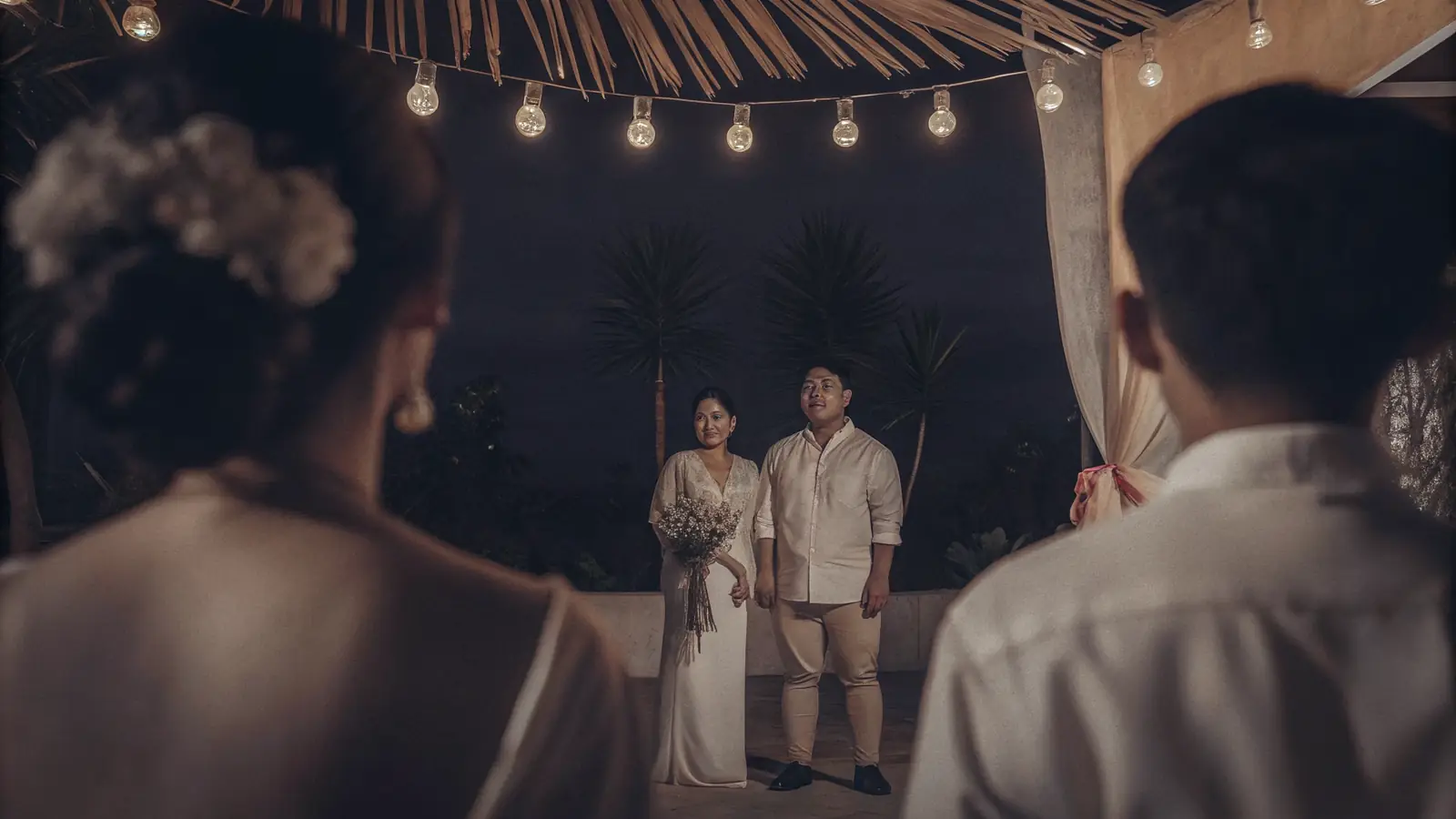
A Muslim Filipino wedding is, at its heart, a solemn covenant and a joyful coming-together of two families. Among the Moro peoples of Mindanao — the Maranao, Maguindanao, Tausug and others — the celebration can be richly cultural, layered with music, attire and feasting that vary beautifully from community to community. This overview is written respectfully by an informed outsider; it describes the marriage in general, well-established terms only. For the specifics that matter to your union, the right guides are your imam and your families, and the governing law is the Code of Muslim Personal Laws of the Philippines.
The nikah — the marriage contract
The central act of an Islamic marriage is the nikah, the marriage contract solemnised in the presence of witnesses and officiated by an imam or other qualified person. It is built on consent, on the agreement of the parties, and on the involvement of family. The exact form — the words, the setting, the order of the day — varies by community and officiant, so confirm everything with yours. What is constant is the seriousness of the commitment and the witnessing of it by family and community.
The mahr (dowry) and the families
A defining feature of the Islamic marriage is the mahr — a gift or dowry given by the groom to the bride as her own. It is a mark of honour and commitment, and the details are agreed between the families. Among Moro communities the family plays a central, respected role throughout: in the courtship, in the negotiations, and in the celebration that follows. The wali (guardian) of the bride is part of this process. None of these elements is decorative; each carries meaning, and each is best understood through your own family and officiant rather than a general guide.
- The marriage rests on the consent of the parties and the involvement of family.
- The mahr is the bride’s own; its nature and amount are agreed between the families.
- Witnesses and a qualified officiant are part of a valid nikah.
- Cultural practices — attire, music, the kanduli feast — differ across Maranao, Maguindanao, Tausug and other communities.
Worth keeping
A Moro wedding is a covenant witnessed by community: two people consenting, two families joining, an entire kin-network celebrating as one.
The celebration
Beyond the contract, the festivities can be magnificent. The kanduli — the communal feast — gathers the wider family and community. Traditional dress, the okir art motifs of Maranao culture, kulintang gong-and-drum ensembles, and dances passed down through generations can all feature, depending on the family and locality. Halal catering is essential, and many couples plan the day around prayer times and the comfort of elders. The richness of the celebration is a point of pride, and it differs from one community to the next — there is no single template for a Moro wedding.
The legal layer
Muslim marriages in the Philippines are governed by the Code of Muslim Personal Laws (Presidential Decree 1083). Requirements, registration and the role of the Shari’ah authorities are best confirmed with your imam and your local Shari’ah Circuit Court office, because details and procedures vary by place and situation. We describe customs here in general terms only and do not give legal or religious rulings — defer to your officiant and your community on anything that affects the validity or registration of your marriage. For the universal parts — the guest list, the budget, the suppliers and the timeline — a free planning workspace can help keep everything in one calm place while your family and imam carry the religious and legal heart of the day, and a free wedding website makes it easy to share details with relatives near and far.
Organise the everyday logistics in one calm place, and leave the sacred parts to your family and imam.
Start planning freeKeep reading
More from the edit

Ready to start your own plan?
Guest list, budget, schedule, seat plan, and mood board — free with every Setnayan account.
Start planning · free