
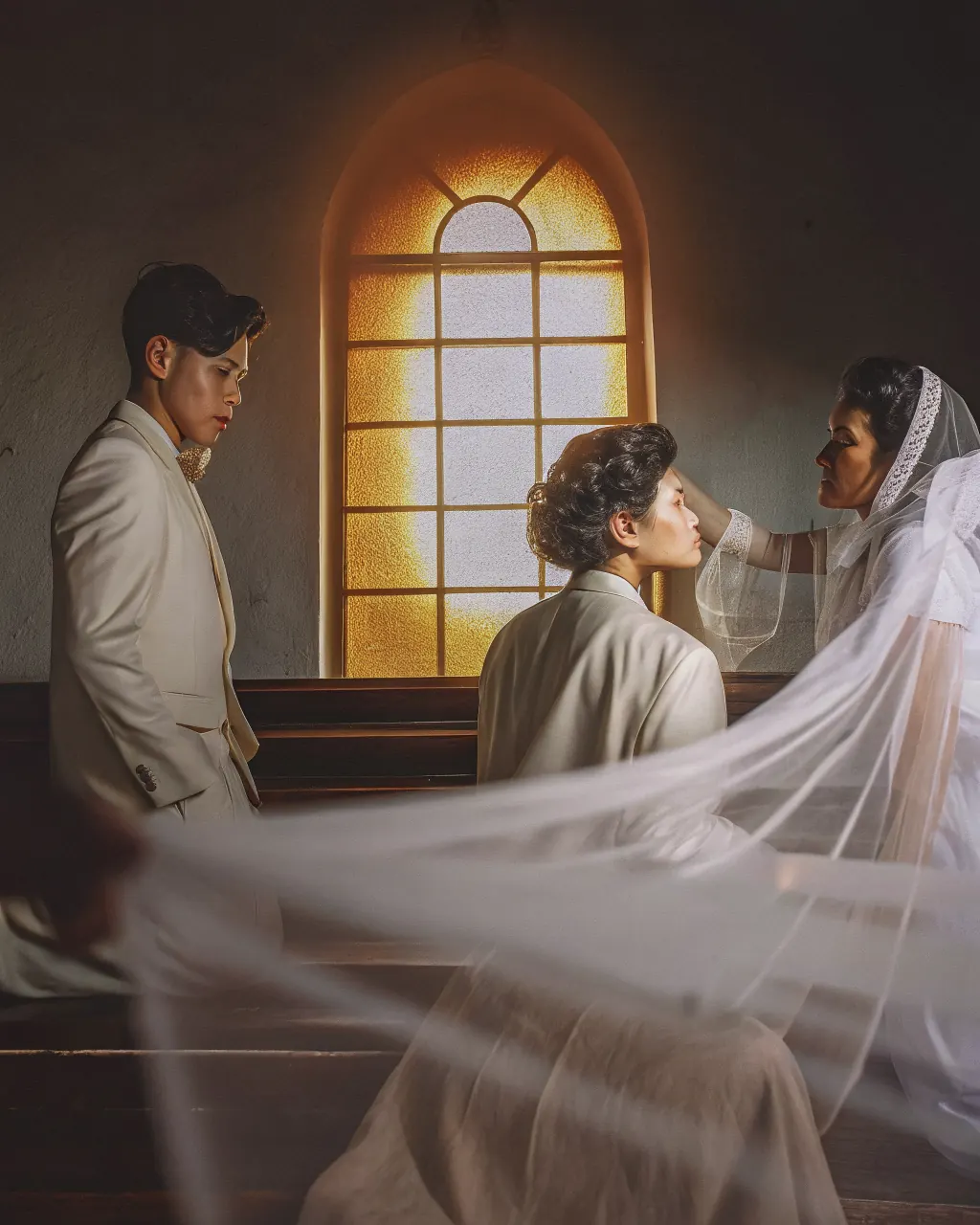
A born-again Christian wedding centres the couple’s faith in Christ and the Word of God. Held in the couple’s own church and led by their pastor, the ceremony tends to be warm, worshipful and personal — rich in scripture, prayer and praise music, and often shaped to reflect the couple’s own testimony. Practices and requirements differ from one congregation and denomination to another, so the surest guide is always your own pastor and church. What follows is a respectful, general overview, not a rulebook, and it should never stand in place of the counsel your own church gives you.
A ceremony built on Scripture and worship
Where a Catholic wedding follows a fixed liturgy, a born-again ceremony is usually led by the pastor with more flexibility in its shape. Expect worship songs, a message or short sermon from the Word, heartfelt prayers over the couple, and vows that many couples choose to personalise. The tone is celebratory and devotional at once — a congregation rejoicing with the couple before God. For many couples, the chance to make the ceremony a genuine expression of their own walk of faith is the whole point.
That openness also means the ceremony often reflects the couple themselves. A song that mattered during the courtship, a friend who shares a short testimony, a particular passage of scripture that has carried the relationship — these personal touches are welcomed in a way a more fixed rite may not allow. The result is a wedding that feels intimate and unmistakably the couple’s own, even as it follows the church’s lead.
- The pastor of the couple’s church typically officiates.
- Scripture readings, a message, prayer and praise-and-worship music are common elements.
- Many couples write personal vows grounded in their faith and testimony.
- Pre-marriage counselling with the pastor is often part of the path to the wedding.
Worth keeping
For many born-again couples, the wedding is less a performance and more a worship service with two people at the centre of God’s blessing.
Ask your church first
Requirements vary widely across independent and denominational churches — some ask for membership, a season of counselling, or specific documents before they will hold a wedding. Because there is no single national standard for born-again ceremonies, your own congregation is the authority on what it asks of you. Begin that conversation with your pastor early, well before you lock in a date, so the church’s requirements and your preferred timeline have room to meet in the middle rather than collide.
The reception and the legal side
Outside the ceremony, planning looks much like any Filipino wedding: a venue, a caterer, photo and video, and a guest list. And as with every marriage in the country, the civil requirement — the marriage licence — still applies, so handle it early. If you are weighing a church ceremony against a purely civil one, our civil-versus-church explainer lays out the differences plainly, which can be a helpful conversation to have with your partner before you commit. Many born-again couples also build a simple programme that includes worship, so guests of every background can follow along and feel part of the celebration.
A free planning workspace keeps the reception, budget, suppliers and guests in one place while your church carries the spiritual heart of the day — and a free Event Hub helps you share the details with everyone you love, in any city or province. With the practical side organised, you are free to focus your energy where it belongs: on the worship, the vows, and the people gathered to celebrate with you.
Weighing church versus civil? Here is a clear, side-by-side comparison.
Start planning freeKeep reading
More from the edit
Ready to start your own plan?
Guest list, budget, schedule, seat plan, and mood board — free with every Setnayan account.
Start planning · free